Friday, February 3, 2017

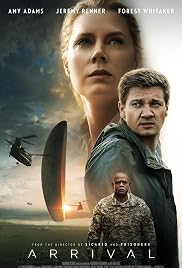
Arrival

Science fiction films tend to stratify into 3 categories, in my mind. The most commercially successful are really just adventure films set in a science fiction universe. These focus on action and fantasy, with futuristic or high-concept elements. They leverage classic story archetypes and superlative visuals to produce enjoyable escapism. Star Wars is the exemplar of this sub-genre, and although Star Trek aspires to greater scientific rigor, it belongs here too.
 
The second set similarly uses science as a backdrop for noir. These are the darker films, the dystopian adventures. They may not be as hopeful or as fun, but they tend to be more pointed. These films typically propound on a "what if" premise, plumbing the dingy depths of possibility. The best are often imaginative, twisted interrogations of human nature or society. This is Blade Runner, The Matrix, Dark City.
 
Finally, there are what I like to call "thinking" films. They are headier, and explore ideas that fundamentally change reality or alter our perception of it. They eschew spectacle and adrenaline to allow the audience to dive deep on a single premise. These films are typically smaller in focus, slower, often centering around the journey of a single character. Usually less accessible movies, Hamlet might opine that these "pleased not the million, (but) 'twas caviar to the general". I would count 2001, Interstellar, K-PAX and others as "thinking" sci-fi. Arrival fits securely in this group.
 
Arrival is a big budget take on a small story, focusing almost myopically on Louise, a linguistics expert who is conscripted to help communicate with extra-terrestrial beings who arrive suddenly above the Earth. Her journey of consciousness as she learns to comprehend the aliens serves as the plot, using the events of the story more as context than narrative. Director Denis Villeneuve deftly uses arresting visuals and frank, realistic sensibilities to relate a story that might otherwise be esoteric. It's fantastic elements are believable because of his steady hand, and even the few quibbles i had in hindsight melted away while watching the screen.
 
Arrival is an experience. It is thoughtful and beautiful, and has lingered in my thoughts since viewing.

9/10
Content is appropriate for teens

Monday, January 30, 2017

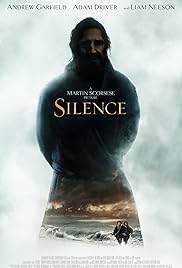
Silence

Martin Scorsese’s “Silence” is not entertainment. It offers neither thrill, nor escapism, nor joy. It is not education in that It does not aim to convey facts or impart knowledge. It is not as didactic as a homily, or as quizzical as a kōan. I imagine it is best described simply as art. That seems an apt label, since the exercise of watching “Silence” resembled to me the ponderous study of a painting in a museum. A painted masterpiece does not merely depict the beauty of its subject, but conveys also some aspect of truth. The nature of this truth is imbued partly by the master, and reflected partly from the observer who explores it. The Mona Lisa does not force you to understand why she smirks, nor does she demand that you respond in kind. Yet each man appreciates her differently, and each in his own way gleans a bit of her truth viewed through the lens of his own. Such is the nature and quality of “Silence”.
 
This is a sober, challenging film in every respect. The heady subjects of faith and doubt in the apparent absence of absolution are explored with an unflinching honesty. Scorsese refrains from tugging at heartstrings or welling up emotional responses through music. He refuses to tell the audience what to think, preferring instead to simply depict a story worth thinking about. The lack of emotional manipulation is stunning, almost unsettling. It is a masterwork of restraint in a milieu typified by pretension and hyperbole.

9/10
Content is appropriate for adults only